
What Artificial Intelligence, LLMs and AI Tools Really Are
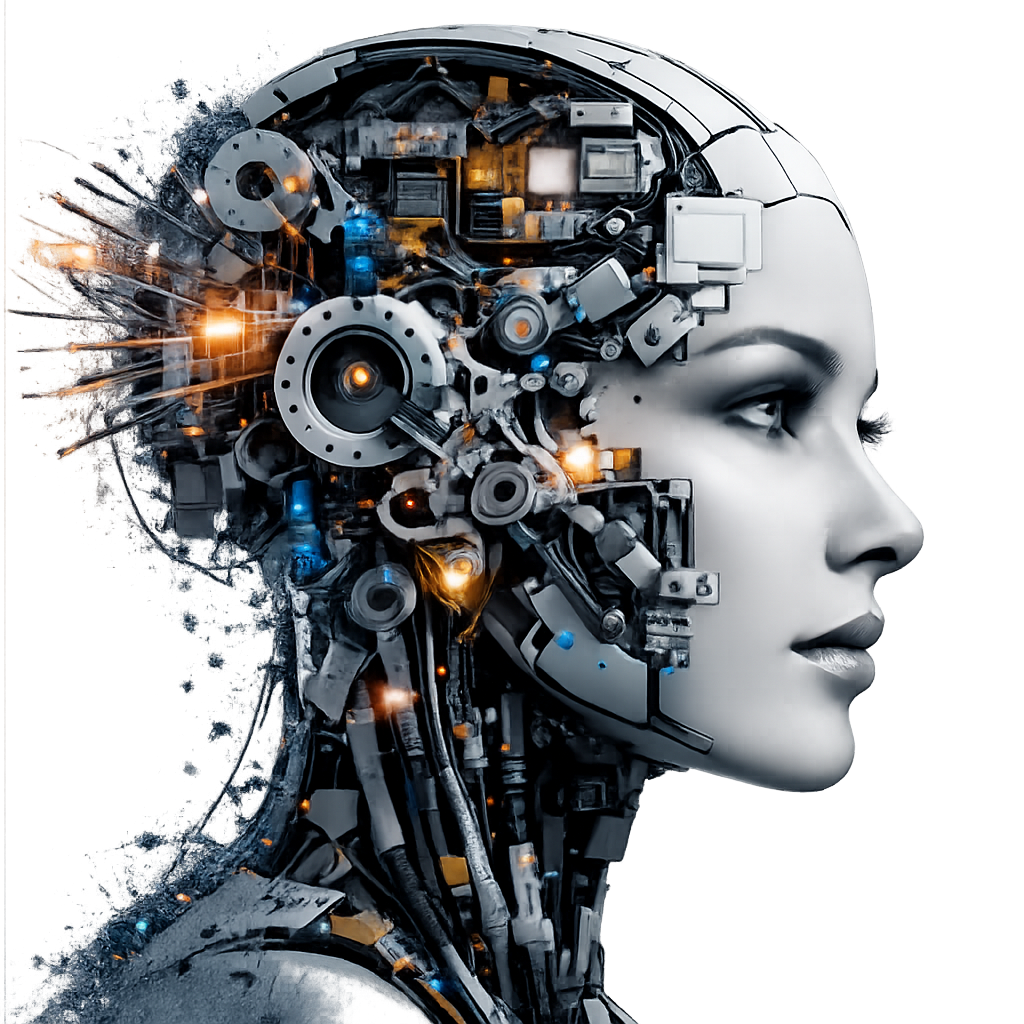
Today, AI is appearing in more and more places, in writing texts, image generation, search engines, chatbots, automations, or analyses. But many people ask themselves: What exactly is Artificial Intelligence? What are LLMs (large language model), and why do they play such an important role in tools like ChatGPT, Claude, or Gemini? And what can AI tools really do today? On this page, you will find a clear, structured, and well-founded introduction to the world of AI, LLMs, and modern AI applications, including background information, examples, and practical classification.
Artificial Intelligence explained simply: origin, types, LLMs, AI chips, and the future
Artificial Intelligence, or AI for short, is one of the most important technologies of our time. Many people already encounter it every day, for example in search engines, translation services, chatbots, voice assistants, image generators, or recommendation systems. Nevertheless, it is often unclear what AI actually is, where it comes from, and what technically distinguishes it in the background from traditional software. The definition of Artificial Intelligence is that it is a technology that enables computers to perform tasks for which human abilities such as learning, understanding, problem-solving, or language processing were previously required.
This knowledge article explains the history of Artificial Intelligence from its early foundations to the present day, describes the most important types of AI, shows the difference between AI chips, CPUs, and other processors, explains Large Language Models and APIs, and classifies what an AI tool actually is.
The origin of AI: When did the concept of Artificial Intelligence begin?
The origin of Artificial Intelligence does not lie in a single invention, but in the combination of mathematics, logic, computer science, and the question of whether machines can replicate mental performance. An early foundation was Alan Turing’s essay “Computing Machinery and Intelligence” from 1950. In it, Turing posed the famous question of whether machines can think and formulated the so-called imitation game, from which the Turing test later emerged.
The actual starting point of AI research as an independent field is usually considered to be the Dartmouth proposal of 1955 for the Dartmouth Summer Research Project on Artificial Intelligence, which was to take place in the summer of 1956. In this proposal, the term “artificial intelligence” was explicitly used. That is why Dartmouth is often referred to today as the birth moment of modern AI research.
What is important here is this: Artificial Intelligence was not “discovered” like a law of nature. It emerged as a scientific concept from the idea that certain aspects of human intelligence can be described mathematically and reproduced technically. That is exactly what later developed into its own field of research and application.
The history of AI: From the beginnings to today
After the early spirit of optimism in the 1950s and 1960s, the first programs emerged that demonstrated logical reasoning, language processing, and symbolic problem-solving. Even at that time, there were already the first milestones such as early chatbots, expert systems, and robotic systems. One well-known example is MYCIN from the 1970s, one of the first expert systems to support medical diagnoses.
However, the initial euphoria was followed by disillusionment and setbacks. In 1973, a critical report in the United Kingdom contributed significantly to funding being cut. This phase is now referred to as the first AI Winter. In the 1980s, there was another decline in expectations and investment after many hopes for rapid breakthroughs had not been fulfilled.
From the 1980s and 1990s onward, machine learning gained importance. Particularly important was the development and later practical use of backpropagation, which made multilayer neural networks trainable. At the time, this development was considered the foundation of what later became deep learning. In the 2000s and 2010s, greater computing power, large amounts of data, and GPUs then led to the well-known breakthroughs in image, speech, and pattern recognition.
A major leap in public perception came in the 2020s with generative AI and Large Language Models. An early prominent example of a very large language model was GPT-3, which was able to handle many language tasks with little additional training. Since then, AI systems have spread widely and have now arrived in everyday software, business applications, and digital devices.
What is AI? Explained simply
Simply put, Artificial Intelligence is a technology that allows computers to take over tasks that previously required primarily human abilities. These include, for example, understanding language, recognizing patterns in images, translating texts, predicting developments, or answering questions. IBM describes AI as a technology that enables machines to replicate human learning, understanding, problem-solving, decision-making, creativity, and a certain degree of autonomy.
For beginners, AI can therefore be summarized like this: An AI receives data, recognizes patterns in it, and uses those patterns to solve a task. A spam filter recognizes typical features of unwanted emails. An image recognition system recognizes certain shapes and structures. A language model recognizes relationships between words and sentences.
What types of AI are there?
AI can be classified in different ways. Two perspectives are especially common:
- by scope of capability
- by mode of operation
This distinction is helpful because it answers two different questions:
On the one hand, how broadly an AI can be used, and on the other hand, how it fundamentally works.
Types of AI that are already being used in practice today
Weak AI or Narrow AI
Weak AI, also called Narrow AI, is the form of AI that is actually used today. It is specialized for specific tasks and does not possess general human-like intelligence. Such systems can often solve individual problems very well, but they are not universally applicable.
Practical examples:
Search engines, spam filters, chatbots, image generators, voice assistants, automatic transcription, product recommendations in online shops, translation services.
Reactive AI
Reactive AI processes only the information available in the current moment. It has no real memory of earlier experiences or past states. Such systems therefore react directly to the current input without learning from a longer past.
Practical examples:
Early game systems such as Deep Blue, simple rule-based systems, clearly defined decision systems without long-term context.
AI with limited memory
This form of AI uses current data and also incorporates limited earlier information. Many of today’s AI systems fall into this category. They can therefore draw on previous inputs or observations to a certain extent without truly possessing comprehensive understanding or consciousness.
Practical examples:
Voice assistants, many chatbots, driver assistance systems, recommendation systems, autonomous driving functions, and modern generative AI applications.
Types of AI that are still only theoretical
General AI or AGI
AGI stands for Artificial General Intelligence. It refers to an AI that could not only solve individual specialized tasks, but could in principle handle any intellectual task with flexibility similar to a human. Such an AI would therefore have to be able to switch between very different domains without being separately developed or trained for each one.
So far, it is a theoretical concept.
Superintelligence or ASI
ASI, or Artificial Superintelligence, refers to a hypothetical AI that would significantly surpass humans in nearly all intellectual domains. This idea is often discussed in debates about the future, but it has not currently been technically realized.
ASI is still a theoretical future scenario.
Theory-of-Mind AI
Theory-of-Mind AI refers to an AI that could truly understand human thoughts, intentions, emotions, and social contexts. Such an AI would therefore have to do more than react to data; it would need to recognize the internal states of others and classify them meaningfully.
At most, there are early research approaches in the field of social or emotional interaction.
Self-aware AI
Self-aware AI would be an AI with its own consciousness and a genuine sense of self. It would not only process information, but would possess its own inner experience or a conscious self-model.
Today, in practice, almost exclusively weak AI is used. This includes above all reactive systems and systems with limited memory. This AI can already be very useful and powerful, but it remains limited to specific tasks or areas of application.
General AI, superintelligence, Theory-of-Mind AI, and self-aware AI, on the other hand, still belong to the realm of theory or research. They are important conceptual models, but not real technologies available today.
What is an AI chip?
An AI chip is a specially developed chip or hardware accelerator for AI models. Such chips are designed to execute typical AI computing operations particularly quickly and efficiently.
The reason for this is simple: Modern AI, especially neural networks and Large Language Models, requires enormous amounts of computing operations. This means that AI chips accelerate the work of neural networks and thus also the performance of applications such as chatbots or generative AI through parallel processing.
How is an AI chip structured?
There is no single standard structure for every AI chip, but typical AI accelerators have many specialized computing units for parallel processing. NPUs are specialized microprocessors optimized for neural networks, deep learning, and machine learning. This means that NPUs process large amounts of data in parallel and are designed to perform AI tasks locally and efficiently.
Put simply, an AI chip often consists of many computing units for matrix and tensor operations, fast data paths, and memory structures tailored to them. The focus is less on general control logic and more on massively parallel mathematics. That is exactly what makes such chips so valuable for AI models.
What is the difference between an AI chip, a CPU, and other chips?
The CPU (Central Processing Unit) is the classic universal processor. It is strong in general system control and sequential processing. IBM describes CPUs as processors that execute instructions one after another and are therefore very well suited for many general tasks.
The GPU (Graphics Processing Unit) was originally developed for graphics, but it is particularly well suited for parallel calculations. That is why it is now central to many machine learning and deep learning tasks. IBM emphasizes that GPUs are better at breaking large tasks down in parallel and are therefore often faster and more efficient than CPUs in compute-intensive AI applications.
The NPU (Neural Processing Unit) or, more generally, the AI chip is even more specifically specialized for AI tasks. Put another way, the NPU is a processor that accelerates AI-based operations and can relieve the CPU and GPU for other tasks. In practical terms, this means:
- CPU = all-rounder for general computing and control tasks
- GPU = strong in large-scale parallel processing
- NPU / AI chip = particularly efficient for AI operations, often locally on devices or as a specialized accelerator
What is a Large Language Model?
A Large Language Model, or LLM for short, is a large language model. More precisely, LLMs are deep learning models that are trained on very large amounts of data and can therefore understand and generate natural language. LLMs are based on the Transformer architecture, which is particularly good at handling word sequences and language patterns.
Simply explained, an LLM learns statistical patterns of language from a very large number of texts. It recognizes which words, terms, or sentence parts are likely to belong together. This enables it to answer questions, write texts, summarize content, translate, or help with programming. At the same time, this also means: An LLM is not human consciousness, but a mathematical model that reacts to patterns and probabilities.
Which LLMs are there?
The list of large language models changes regularly. According to official documentation, important current model families include OpenAI GPT, Anthropic Claude, Google Gemini, Mistral, and Cohere Command or Aya, among others. In its current API documentation, OpenAI recommends gpt-5.4 as the flagship model for complex reasoning and coding. On April 16, 2026, Anthropic introduced Claude Opus 4.7 as its current model; the Claude API documentation also mentions successors such as Claude Sonnet 4.6 and Claude Haiku 4.5. In its current documentation, Google lists Gemini 3.1 Pro and Gemini 3 Flash, among others. Mistral and Cohere also document their own model overviews and API platforms.
What is important is this: An LLM is not a single brand, but a model class. Different providers develop different models with different strengths, for example for fast responses, complex thinking, coding, document analysis, multilingualism, or multimodal processing.
Typical fields of application for LLMs
Large Language Models are now used in many areas. Typical fields of application include text generation, summaries, question-answer systems, customer support, knowledge assistants, code support, translation, document analysis, and research assistance. IBM generally describes LLMs as models that can understand and generate language and other content in order to perform a wide variety of tasks.
In practice, this means, for example: A company uses an LLM for a support chatbot, a marketing team for text drafts, a development department for code assistance, a law firm for the analysis of long documents, or a knowledge platform for searching internal records. It is precisely this versatility that has made LLMs so relevant in such a short time.
What is an API interface and what do you need it for with LLMs?
An API is a programming interface. It ensures that one piece of software can communicate automatically with another service. In the case of Large Language Models, this means: Your own website, app, WordPress plugin, CRM system, or internal company software can call a language model directly without users having to manually operate the model provider’s interface. According to official documentation, OpenAI provides its models via the Responses API and client SDKs. Anthropic describes the Claude API as a RESTful API for programmatic access to Claude models and Claude Managed Agents. Google explains that an API key is required for the Gemini API, which is created and managed in Google AI Studio.
APIs are needed whenever AI is not supposed to be just a chat window, but part of a real application. Typical examples are website chatbots, automatic email processing, AI-supported search functions, document analyses, AI functions in apps, or internal company assistants. Cohere describes this very directly: With API and SDK, developers can integrate LLMs into applications with just a few lines of code and an API key.
What is an AI tool?
An AI tool is the concrete application that makes AI usable for a specific purpose. The AI model is the technical engine in the background, the API is the interface for integration, and the tool is the finished product that users see and use. This classification follows directly from the way AI models and APIs are used in products.
An AI tool can be, for example, a chatbot, a translator, an image generator, a meeting assistant, a transcription service, a document analysis system, or a coding assistant. An AI tool is therefore not its own fundamental technical category like “LLM” or “NPU,” but the practical product form of AI.
Advantages of AI
Artificial Intelligence can support people in many areas. The most important advantages include faster information processing, automation of recurring tasks, better pattern recognition, support with language and translation, aids for accessibility, and new possibilities in research, medicine, and education. Google explicitly describes AI as a technology with the potential for positive change for people and societies.
The decisive benefit often lies not in completely replacing people, but in relieving them and complementing their work. AI can evaluate large amounts of data more quickly, structure complex information, and save time on routine tasks. This creates more room for evaluation, responsibility, creativity, and interpersonal decisions. This positive perspective is also compatible with the broad fields of application of AI and LLMs described by official provider and foundational sources.
Risks of AI
In addition to the opportunities, there are also real risks. These include incorrect answers, invented answers (so-called hallucinations), biases in training data, lack of transparency, misuse, data protection problems, or excessive dependence on automated decisions. Even the official model and API documentation makes it clear that providers explicitly address safety, model behavior, and controlled use. Anthropic, for example, describes safety evaluations and differences in the behavior of its models.
Especially with language models, it is important to understand that convincingly phrased answers are not automatically correct. An LLM can appear linguistically strong and still produce factually incorrect content. That is why human review remains indispensable in many areas, especially in education, medicine, law, technology, or finance.
Outlook for the future of humanity
A fact-based positive outlook on AI is this: If Artificial Intelligence is developed and used responsibly, it can significantly support people in many areas of life and work. Even today, the official foundational sources show that AI can understand language, recognize patterns, structure information, make knowledge accessible, and support complex tasks. This opens up major opportunities for education, research, accessibility, productivity, and medical innovation.
The vision for the future is therefore not that machines will displace humans, but that AI will become a tool that expands human abilities. It can help make knowledge more accessible, facilitate communication, make complex relationships easier to understand more quickly, and reduce repetitive work. At the same time, it remains crucial that humans define goals, rules, and responsibility.
That is exactly where the great task of the coming years lies: using AI in such a way that its benefits grow without ignoring the risks.