


“The future of home care is here”
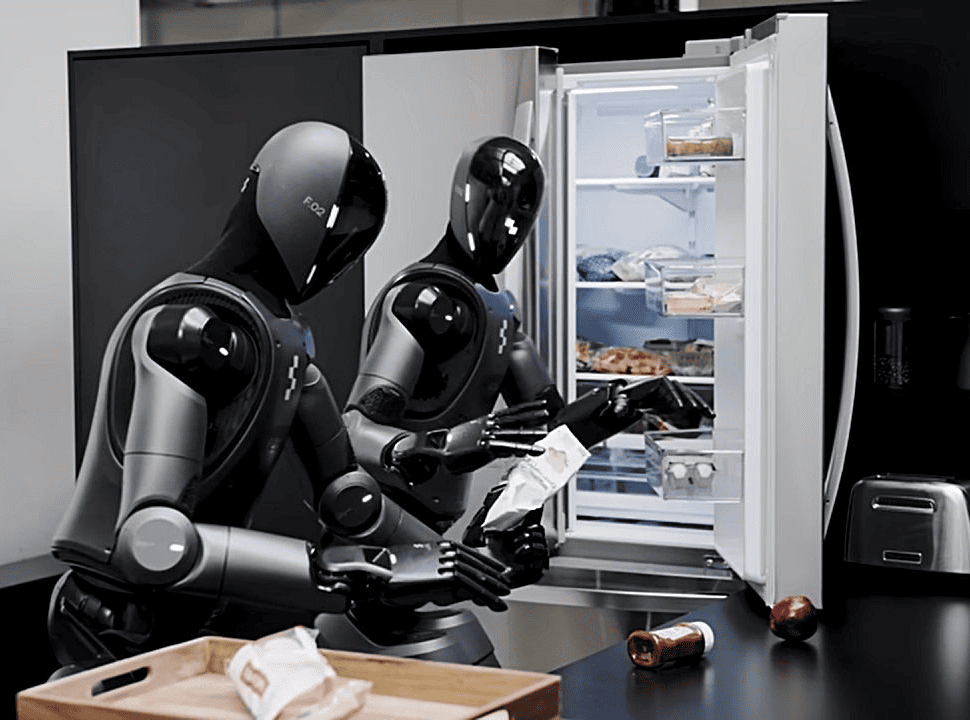
Figure AI develops electrically powered humanoid robots designed to perform human tasks in industrial, logistics, and—in the future—domestic environments. Figure 02 was tested at BMW Spartanburg in a real production environment; Figure 03 is more focused on domestic use, Helix AI, safety, and mass production.
Figure.AI
The future of home help is here
Location: USA ⓘ Figure AI Inc, 3960 N First St, San Jose, CA 95134, USA.
Target audience
Figure AI is primarily aimed at companies that want to test or scale humanoid robots for physical tasks in real-world work environments. Figure is particularly relevant for the automotive, logistics, warehousing, manufacturing, research, robotics teams, and corporate innovation labs sectors. Figure 03 expands the company’s positioning toward the home market, but its proven strengths currently lie primarily in industrial and commercial pilot operations.
Outstanding features
Figure combines a humanoid hardware body with Helix, a vision-language-action system designed to control perception, movement, and reasoning. According to the manufacturer, Figure 03 features newly developed sensor technology, cameras with higher frame rates and lower latency, palm cameras, tactile finger sensors, improved audio hardware, inductive charging, and a design optimized for mass production. Particularly compelling is the evidence that Figure 02 performed real production tasks on an active assembly line at BMW.
Key Areas of Application
The main areas of application include automotive manufacturing, parts handling, logistics, warehouse operations, pick-and-place, physically demanding tasks, robotics research, AI-driven manipulation, household chores, and commercial automation. Figure 02 was tested at BMW for placing sheet metal components into fixtures; Figure 03 is designed to support a wider range of tasks, such as household chores, sorting, and grasping variable objects, thanks to Helix and improved hands.
Usage & Notes
Figure is not currently a traditional self-service product. Real-world use occurs through direct partnerships, pilot programs, or enterprise deployments. Before deploying the system in the EU, operators should review security zones, risk assessments, the Machinery Directive/Regulation, liability, occupational safety, camera/microphone use, data flows, the AVV/DPA, SCCs, DPF status, and a data protection impact assessment.
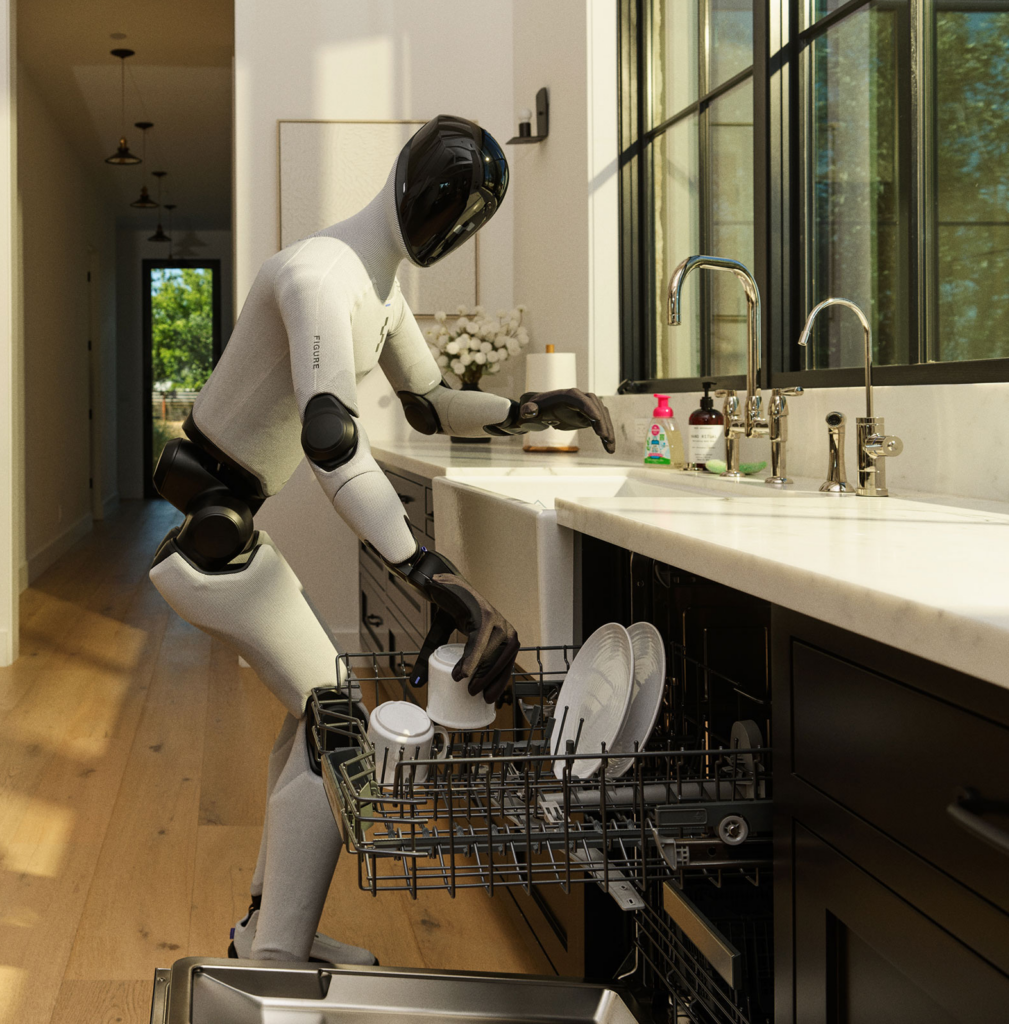
Figure 03 from Figure AI is a versatile humanoid robot designed for use in the home, logistics, and other work environments. The 1.73-meter-tall, 61-kilogram system reaches speeds of up to 1.2 meters per second, carries payloads of up to 20 kilograms, and offers a runtime of approximately five hours. Figure 03 was developed for the Helix AI platform and can autonomously perform tasks such as laundry, cleaning, dishwashing, and sorting objects. Cameras in the head and palms, touch-sensitive fingertips, and movable five-fingered hands support precise grasping and the perception of hard-to-see areas. Thanks to its human-like design, the robot can navigate stairs, tight spaces, and changing living environments. The electric platform is also designed for scalable mass production and the deployment of larger robot fleets. With this, Figure AI positions the Figure 03 as an intelligent, all-purpose robot for practical assistance tasks in everyday life, in businesses, and in future commercial applications.
Helix by Figure AI is a vision-language-action model that integrates perception, language understanding, planning, and motion control into the Figure 03 humanoid robot. The AI system processes camera images, sensor data, and naturally phrased instructions to perform tasks autonomously without pre-programmed scripts. Helix learns new skills from training data and can adapt to different objects, spaces, and situations. The current generation, Helix 02, controls the entire robot body—including legs, torso, arms, hands, and individual fingers—directly from visual and sensory inputs. Palm-mounted cameras and tactile finger sensors enable precise grasping as well as controlled handling of delicate or hard-to-see objects. This allows Helix to handle complex tasks such as tidying up, washing dishes, folding laundry, and logistical sorting tasks. The AI combines semantic understanding with continuous, real-time full-body control. Helix thus serves as the central AI platform behind Figure AI’s humanoid robots and is designed for versatile applications in the home, industry, and logistics.
| Target audience | Assessment |
|---|---|
| Private individuals | Limited – While Figure 03 is explicitly designed for home use, there is no publicly confirmed standard purchase or subscription availability for end customers. |
| Self-employed / Freelancers | Rarely to limited – relevant only for robotics demos, research, content, or pilot projects; not as a standard productivity tool. |
| SMEs | Limited – of interest for industrial pilot projects, logistics, material handling, or research; procurement, security, CE compliance, data protection, and integration must be assessed on a case-by-case basis. |
| Large enterprises | Yes, with pilot/enterprise testing – particularly relevant for automotive, manufacturing, logistics, and repetitive pick-and-place tasks; BMW used Figure 02 for eleven months in Spartanburg. (FigureAI) |
| Developers / Research Teams | Yes – relevant for embodied AI, vision-language-action models, robotics data, manipulation, sensor technology, navigation, and autonomous systems. |
| Industry / Automotive | Very well suited for pilot projects – Figure 02 was tested at BMW for sheet-metal loading on an active assembly line and, according to Figure, contributed to the production of over 30,000 X3 vehicles. (FigureAI) |
| Organizations with data protection concerns | Somewhat critical to limited – US provider; sensor data such as photos, videos, or recordings of the environment possible; no publicly verified EU DPA/AVV or EU hosting structure found. |
Hosting & Data
1) On-prem / local hosting
Meaning: The company operates the solution on its own hardware or within its own infrastructure. In the strictest sense, not only the application runs locally, but ideally the model as well.
2) Private cloud / data center
Meaning: The solution runs in a dedicated or more clearly separated cloud environment, often with a hosting provider or hyperscaler, but in a German data center or in a particularly controlled environment.
3) EU SaaS / managed
Meaning: The provider operates the solution itself as a service. The company uses the tool as a ready-made cloud service, ideally with EU data residency.
4) Hybrid
Meaning: One part of the processing remains internal / local / in a private cloud, while another part runs in an external cloud or EU SaaS.
5) AVV / DPA
Meaning: This is the data processing agreement or Data Processing Addendum. It governs that the provider processes personal data on behalf of the customer and is bound by the customer's instructions.
6) No training
Meaning: The provider does not use your prompts, uploads, attachments, chat histories, or outputs for training or improving the general model — ideally excluded by contract.
7) Open-source / transparency path
Meaning: There is a path toward greater technical transparency and sovereignty, for example through:
- open models
- documented components
- self-hostable parts
- traceable architecture
- export / switching options
| On-prem / local hosting | ❓ |
| Private cloud / data center | ❓ |
| EU SaaS / Managed | ❓ |
| Hybrid | ❓ |
| DPA / AVV | ❓ |
| No training on customer data | ❓ |
| Open source / transparency path | ❓ |
On-premises / local hosting: unclear
The website does not specify whether Figure.AI is offered as an on-prem, local, or self-hosted system.
Private Cloud / Data Center: Unclear
The website does not specify whether dedicated or isolated private cloud environments are offered.
EU SaaS / Managed: unclear
The website does not specify whether there is an EU/EEA SaaS service operated by Figure with EU data residency.
Hybrid: unclear
The website does not specify whether hybrid operating models combining on-premises processing and external services are supported.
SLA / DPA: Indirect / Not Available
Although the privacy policy mentions that Figure may process personal data as a service provider for customers in certain cases, no DPA or corresponding download/signing process is specified on the website.
No training: indirect / not available
The privacy policy lists purposes including “Providing, Customizing, and Improving the Services,” as well as analysis, research, and product development. The website does not specify an explicit exclusion of the use of prompts, uploads, histories, or outputs for training general models, nor does it provide an opt-out option.
Open Source / Transparency Path: Unclear
The website does not specify whether open-source components, open models, or a transparent self-hosting/export path are provided.
Data Processing
The website only describes in general terms that personal data may be collected, used, and disclosed via the service to “service providers” and, where applicable, contractually bound third parties. The website does not provide specific details regarding hosting architecture, data center locations, EU/EEA processing, subprocessors, or data residency.
Conclusion
Based on the website, it is not possible to derive a reliable EU/EEA data protection and hosting approval for a European tool directory. The available documentation is insufficient for a positive GDPR assessment; in particular, key information for EU/EEA users regarding data location, the Data Processing Agreement (DPA), subprocessors, and EU data residency is missing.
Sources
Strengths & weaknesses at a glance
| Strengths | Weaknesses |
|---|---|
| - Demonstrable real-world test in automobile production at BMW | - No public pricing model and no open purchase/subscription structure |
| - Strong AI concept with Helix as a vision-language-action model | - No proven EU/German launch for private customers |
| - Figure 03 is designed for household, commercial applications and mass production | - Data protection situation for EU use unclear, especially due to sensor data, video/audio recordings and product improvement |
| - Official specifications of 5 hours runtime, 20 kg payload, 61 kg weight and 1.2 m/s speed for Figure 03 | - Safety, liability and operational risks for physical robotics remain high |
| - Advanced sensor technology: cameras, palm cameras, tactile finger sensors and audio for voice interaction | - Figure 03 is not yet a widely available consumer robot despite home focus according to publicly verifiable information |
Reviews
0 reviews in total
There are no confirmed reviews for this tool yet.
Submit review
Your review will only become visible after email confirmation. This protects the portal against abuse.
Report review
Please select the reason why this review should be checked.
GDPR-compliant usage possible?
Although the website does include a privacy policy, it is clearly geared toward U.S. states and does not demonstrate robust GDPR compliance for users throughout the EU/EEA. In particular, the website does not specify EU/EEA data residency, specific server or data center locations, a Data Processing Agreement (DPA), a list of subprocessors, on-premises or self-hosting options, or relevant certifications. The documentation is therefore too incomplete for an assessment from an EU/EEA perspective.
Positive
The website includes a separate privacy policy, a contact option at [email protected], and information indicating that Figure may, in certain cases, process personal data of end users or employees as a service provider for its clients.
Negative
The documentation available on the website refers to U.S. data protection laws and makes no specific statements regarding the GDPR for the EU/EEA. There is a lack of reliable information regarding EU data residency, mechanisms for transfers to third countries, data processing agreements (DPAs), subprocessors, the option to opt out of AI training, server locations, and security certifications.
Server Location
Not specified on the website. The only information available is that the service is operated and administered from offices in the United States.