


“More than Wisdom, Be with You”; in its online store, Unitree describes itself as a robotics company focused on the development, production, and sale of consumer and industrial robots.
Unitree develops and sells humanoid robots such as the G1, H1/H1-2, H2, and R1, as well as quadruped robots, robotic arms, LiDAR/perception products, and components. The humanoid models are primarily positioned for research, development, education, demonstration, embodied AI, teleoperation, motion research, and early industrial/service pilot projects. Unitree itself points out that global humanoid robotics is still in an early exploratory phase and that users should understand the limitations of humanoid robots before purchasing.
Unitree
More than Wisdom, Be with You
Location: China ⓘ Official Privacy Policy: Hangzhou Unitree Robotics Co., Ltd., Room 306, Building 1, No. 88 Dongliu Road, Binjiang District, Hangzhou, Zhejiang, China. The international store also lists: 3rd Floor, Building 1, Fengda Creative Park, No. 88 Dongliu Road, Binjiang District, Hangzhou City, Zhejiang Province, China.
Unitree G1 / G1 EDU Humanoid robot for research, development, and robotics experiments; according to the official product page, it features 23 to 43 joint motors, support for imitation and reinforcement learning, a force-controlled dexterous hand in the EDU version and options, and high mobility.
Unitree H1 / H1-2 Full-size humanoid with 3D LiDAR, depth camera, high mobility, replaceable battery, and high joint torque density; intended primarily for research, demonstration, and advanced robotics development.
Unitree H2 / H2 EDU New full-size humanoid with 31 degrees of freedom, powerful chip, bionic head, and optional EDU/development options; H2 EDU is available through sales/contact.
Custom Robots / Professional Service Unitree lists Professional Service and Custom Robots in the shop; specific services, SLAs, privacy policies, and integration packages must be requested individually.
Shipping, Customs, Import In its international shop, Unitree notes that customers are responsible for shipping costs, customs duties, taxes, and import clearance; contact information and, if applicable, a Tax ID are required for customs clearance. CE: unclear Current findings: I was unable to find a verified, publicly available EU declaration of conformity for Unitree’s G1, H1/H1-2, H2, and R1 humanoid robots on official Unitree websites. The strongest EU reference found suggests the opposite: A MYBOTSHOP/QUADRUPED document regarding the G1 explicitly states that the G1 provided there, as an R&D device, does not have a CE marking or a declaration of incorporation.
Therefore, the following are required for introduction into the EU: Before import, resale, rental, public demonstration, or productive use, one should obtain at least the following from the manufacturer, EU importer, or integrator: EU Declaration of Conformity or Declaration of Incorporation, list of applicable EU legal acts, risk assessment, technical documentation, operating instructions in the local language, CE marking on the specific product, responsible EU economic operator, battery/RED/EMC/RoHS certificates, and a clear statement as to whether the robot is a complete machine or an incomplete machine.
Target Audience
: With its humanoid robots, Unitree primarily targets research institutions, universities, robotics labs, AI teams, developers, integrators, innovation departments, industrial companies, educational providers, and demonstration/showcase providers. The robots are particularly appealing to organizations seeking to conduct practical research into embodied AI, humanoid movement, teleoperation, sensor technology, robotics control, manipulation, human-robot interaction, or autonomous systems.
Outstanding Features
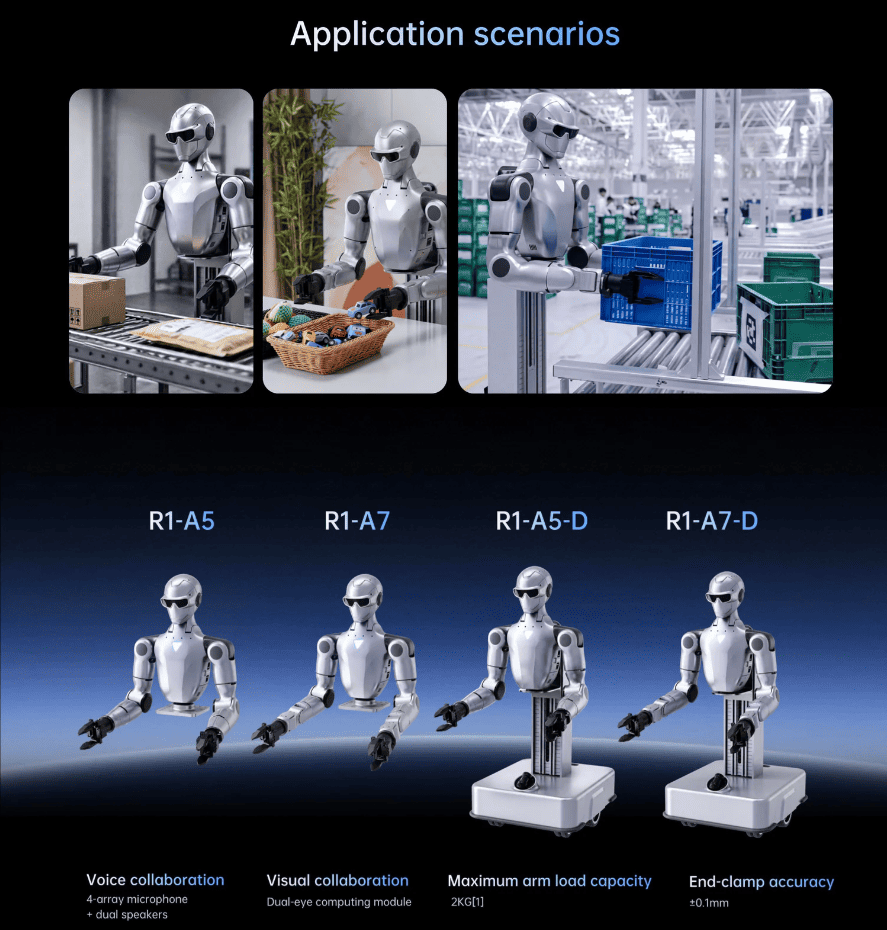
Among the key features of Unitree humanoids are dynamic bipedal movement, a high degree of freedom, PMSM joint motors, LiDAR and camera sensors, microphone/speaker systems, Wi-Fi/Bluetooth, OTA updates, optional Jetson computing modules, SDK development, and open interfaces for joints and sensors. The G1 is positioned as a compact humanoid AI agent, the R1 as a lightweight and affordable entry-level humanoid, H1/H1-2 as a full-size research platform, and H2 as a high-performance full-size humanoid with 31 degrees of freedom and an optional high-compute module.
Key Application Areas
Typical areas of application include robotics research, AI research, embodied AI training, demonstrations, education, university teaching, teleoperation, motion data capture, reinforcement learning, simulation-to-real-world transfer, research on humanoid locomotion, industrial pilot projects, service robotics trials, media/event demonstrations, and prototyping. For productive use in factories, warehouses, healthcare, public spaces, or direct human-robot collaboration, an additional safety, risk, and CE assessment is required.
Usage & Notes
: Unitree humanoids should be viewed as powerful but early-stage robotic platforms. The manufacturer itself highlights their complex structure, high performance, and the need for safety distances. For EU projects, the CE marking issue is central: A robot without full CE marking may not simply be placed on the market or used in production as a complete machine. Before purchasing, buyers should clarify whether the product is a complete machine, an incomplete machine, research equipment, or a custom integration; who the EU importer is; who performs the risk assessment; and who is responsible for the conformity of the entire system.
Unitree humanoid robots
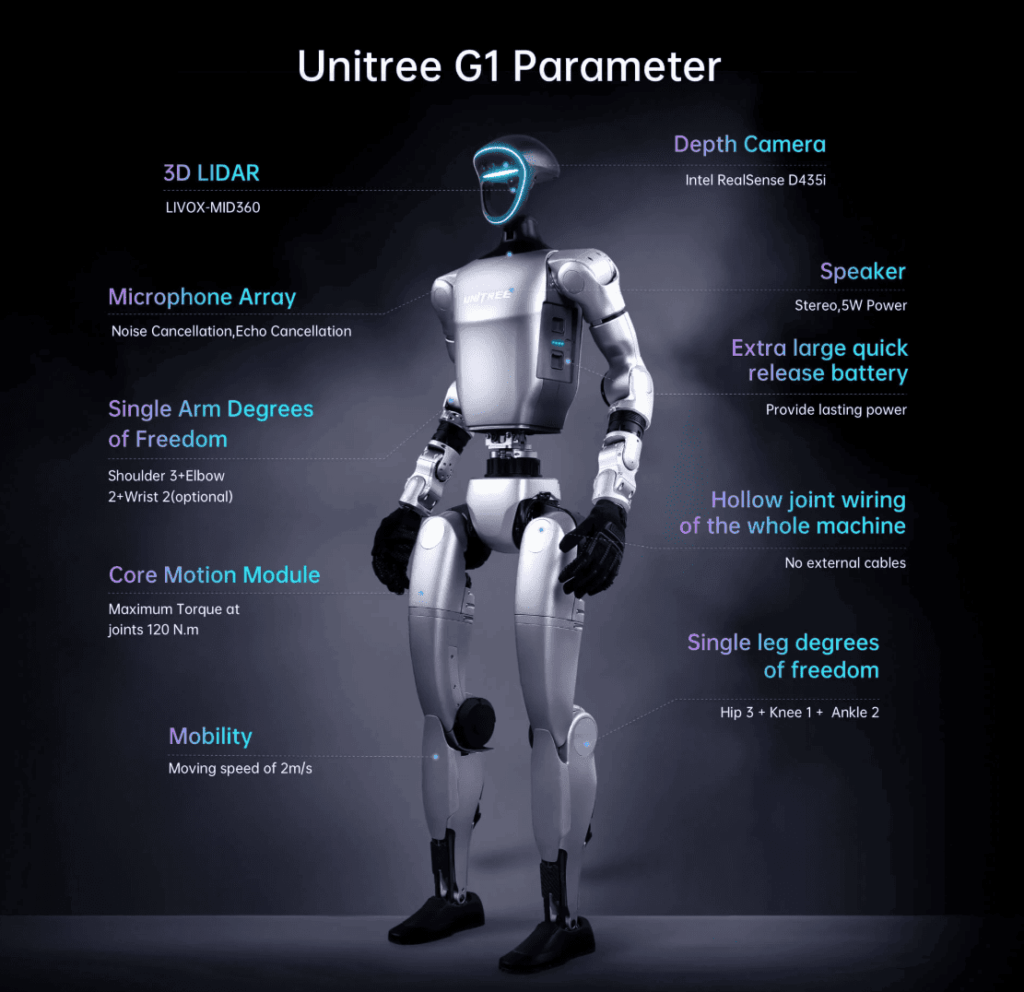
The Unitree G1 demonstrates just how close humanoid robotics has already come to real-world applications. With its compact design, a weight of around 35 kilograms, and a foldable structure, it is significantly more portable than many traditional research robots. At the same time, it offers impressive technical capabilities: Depending on the model, the G1 has up to 43 degrees of freedom, enabling it to perform movements that go far beyond simple walking or arm motions. This high degree of mobility makes it particularly appealing for research, development, education, and initial industrial test environments.
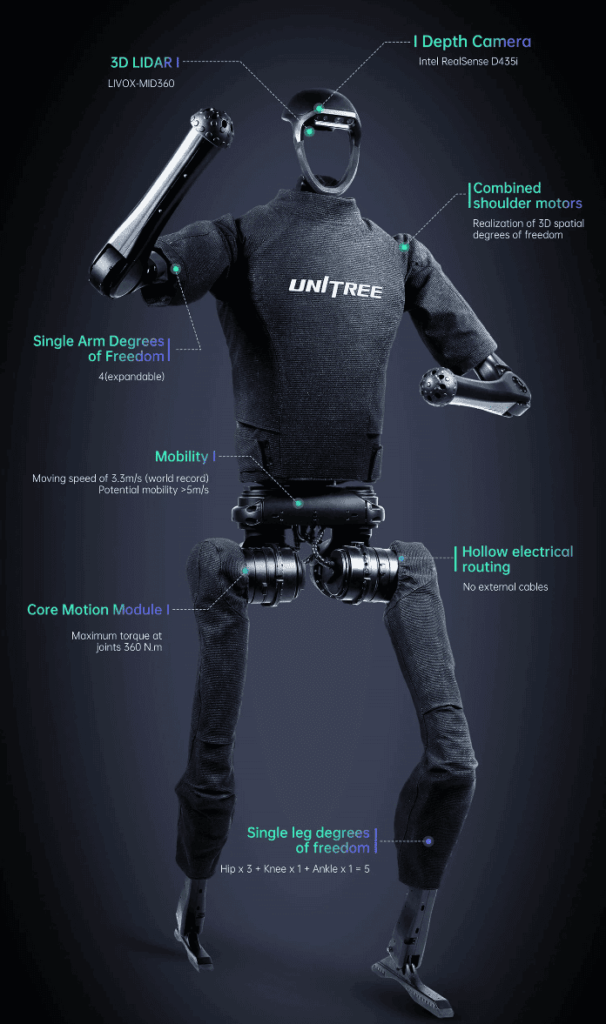
The Unitree H1 represents the next generation of humanoid robotics: powerful, dynamic, and impressively agile. With near-human proportions, advanced 3D perception via LiDAR and a depth camera, and high walking speed, it is designed for demanding research, development, and testing scenarios. Its powerful drive technology enables stable, flexible movements in real-world environments. This makes the H1 more than just a demonstration robot: it is a forward-looking platform for companies, universities, and laboratories that want to test and further develop humanoid robotics in practical applications.
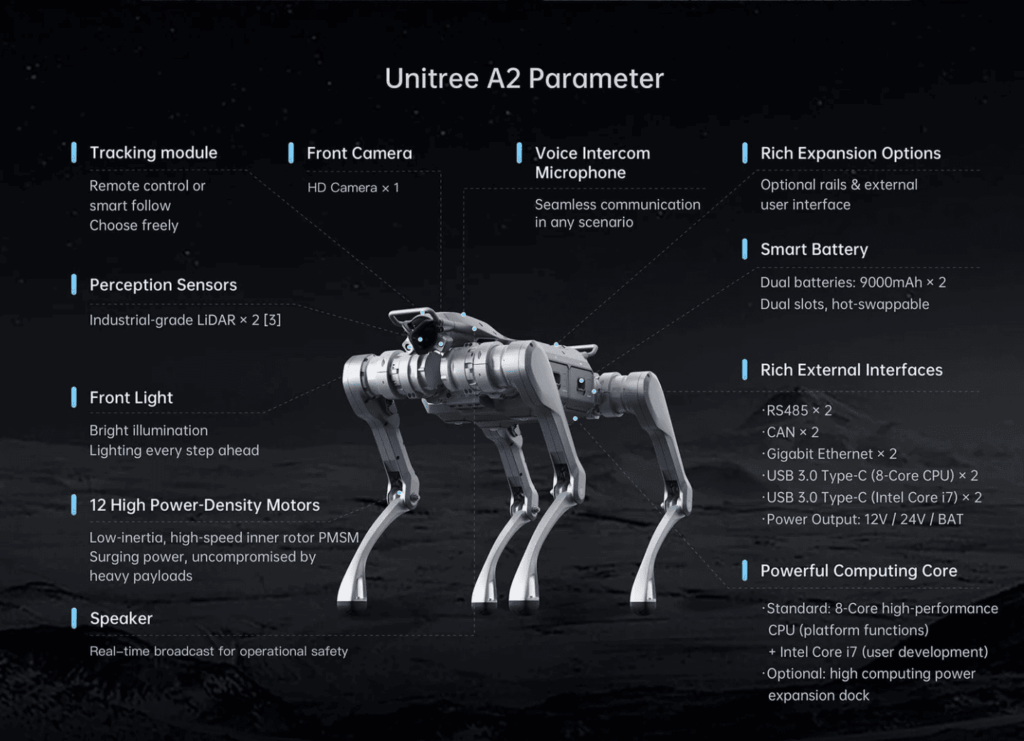
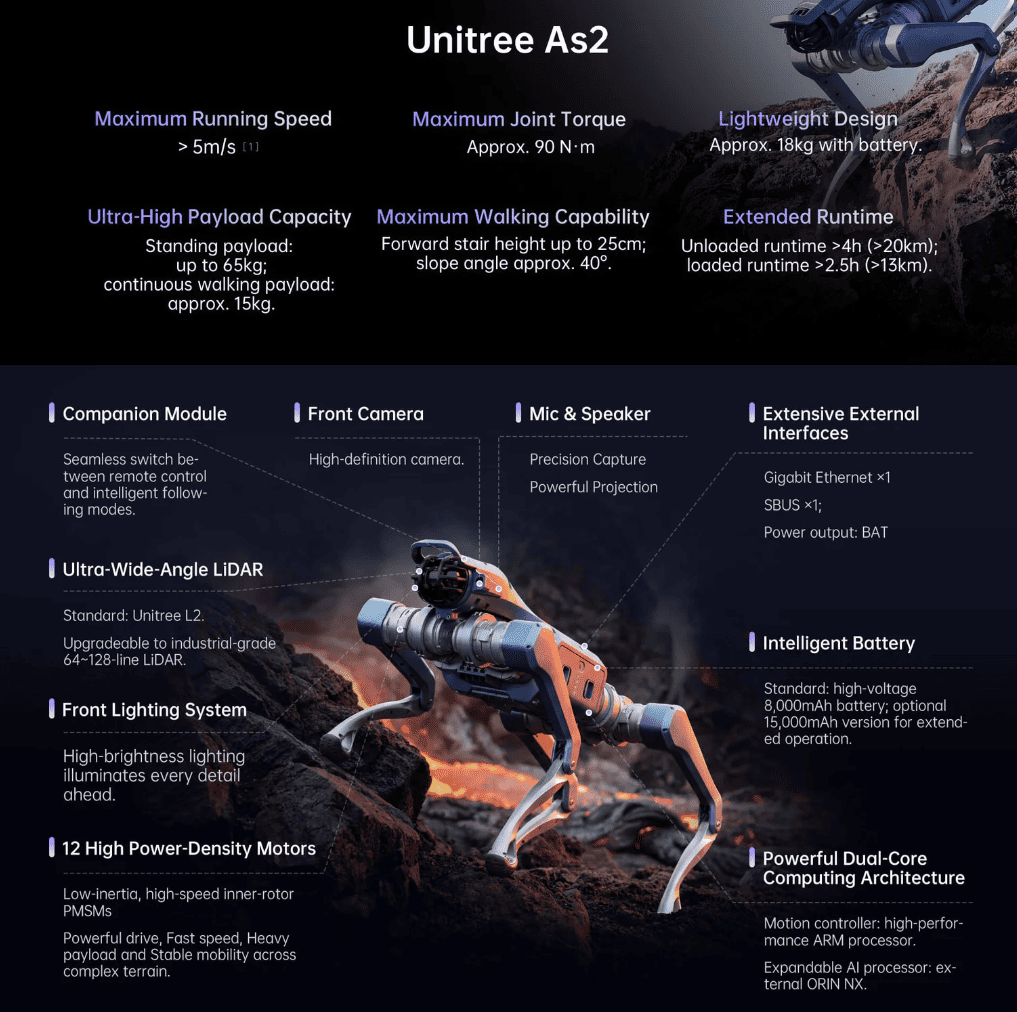
Other models from Unitree
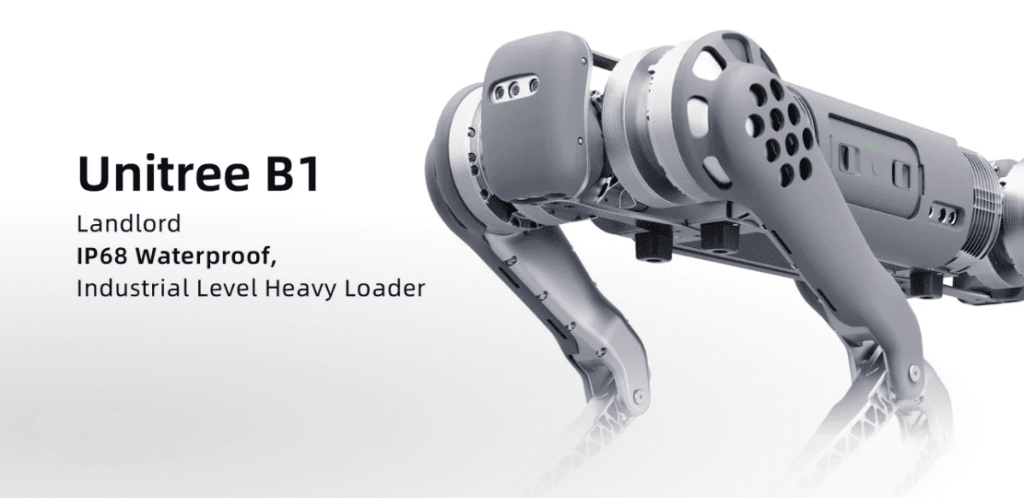
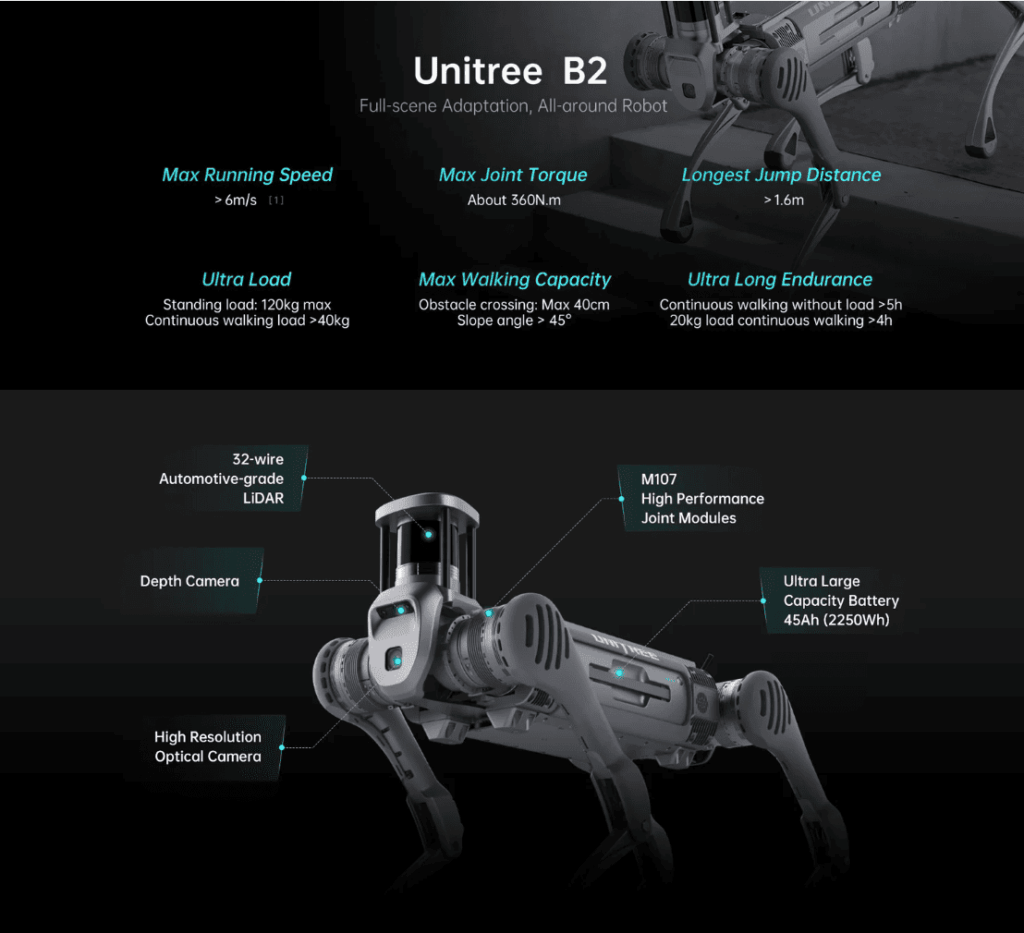
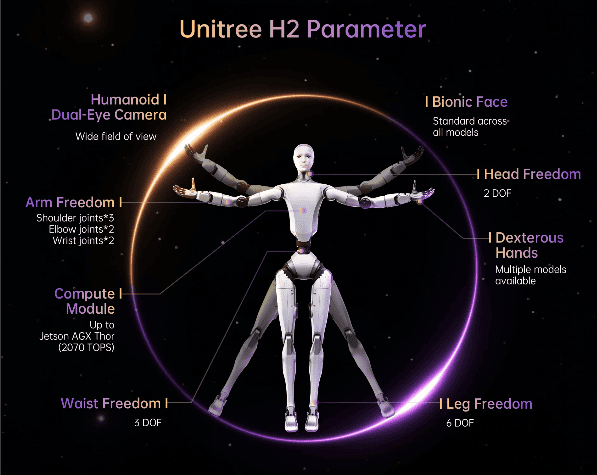
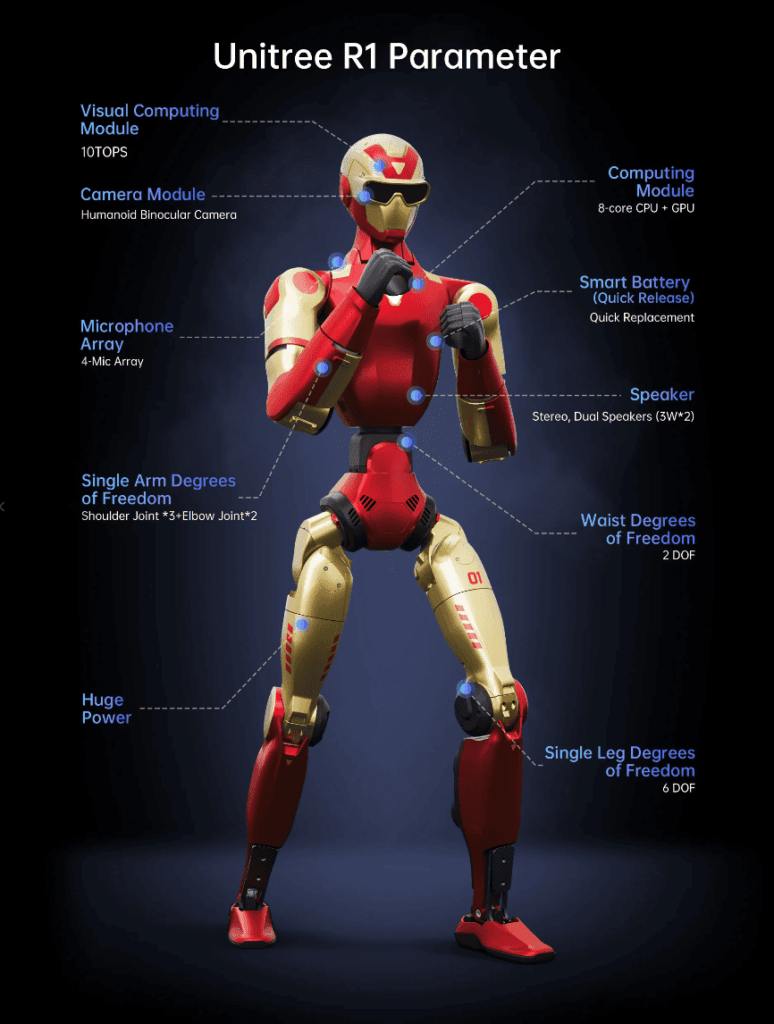
| Target audience | Assessment |
|---|---|
| Private individuals | Limited – technically fascinating, but expensive, security-critical, and more suitable for enthusiasts, makers, or demonstration purposes. |
| Self-employed / Freelancers | Limited – relevant for robotics demos, content, research, showcases, or training; not as a standard productivity tool. |
| SMEs | Conditional to yes – interesting for research, robotics labs, automation prototypes, trade shows, education, and industrial testing. |
| Large enterprises | Yes, with review – suitable for R&D, industrial pilots, robotics strategy, lab environments, and demonstrators; compliance, security, and import requirements must be reviewed. |
| Developers / Research Teams | Very well suited – particularly relevant due to EDU models, open interfaces, simulation, sensor/joint access, and GitHub/SDK resources. |
| Education / Universities | Yes – suitable for robotics, AI, reinforcement learning, motion control, embodied AI, and autonomous systems. |
| Safety-critical organizations | Limited to critical – physical security, export/import regulations, data protection, telemetry, third-party SDKs, and network connectivity must be rigorously reviewed. |
| Data-Critical Organizations | Somewhat critical – no verified information available regarding EU hosting, AVV/DPA, GDPR-specific data processing, or EU sub-processors. |
Hosting & Data
1) On-prem / local hosting
Meaning: The company operates the solution on its own hardware or within its own infrastructure. In the strictest sense, not only the application runs locally, but ideally the model as well.
2) Private cloud / data center
Meaning: The solution runs in a dedicated or more clearly separated cloud environment, often with a hosting provider or hyperscaler, but in a German data center or in a particularly controlled environment.
3) EU SaaS / managed
Meaning: The provider operates the solution itself as a service. The company uses the tool as a ready-made cloud service, ideally with EU data residency.
4) Hybrid
Meaning: One part of the processing remains internal / local / in a private cloud, while another part runs in an external cloud or EU SaaS.
5) AVV / DPA
Meaning: This is the data processing agreement or Data Processing Addendum. It governs that the provider processes personal data on behalf of the customer and is bound by the customer's instructions.
6) No training
Meaning: The provider does not use your prompts, uploads, attachments, chat histories, or outputs for training or improving the general model — ideally excluded by contract.
7) Open-source / transparency path
Meaning: There is a path toward greater technical transparency and sovereignty, for example through:
- open models
- documented components
- self-hostable parts
- traceable architecture
- export / switching options
| On-prem / local hosting | ❓ |
| Private cloud / data center | ❓ |
| EU SaaS / Managed | ⚠️ |
| Hybrid | ❓ |
| DPA / AVV | ❓ |
| No training on customer data | ❓ |
| Open source / transparency path | ⚠️ |
On-prem / local hosting: indirect / not available
The shop's website does not specify any on-premise or self-hosting option for the shop/service infrastructure. While physical robots and partly open interfaces are described for individual products, there is no documented way to operate the relevant service yourself on your own infrastructure.
Private cloud / data center: unclear
A dedicated or segregated private cloud/data center option is not specified on the website. There is also no statement regarding customer-specific EU/EEA data centers or isolated environments.
EU SaaS / managed: partial
The website states that personal data is initially processed in Ireland, i.e. within the EU. At the same time, it explicitly states that data is subsequently stored and further processed outside Europe, including Canada and the USA. Therefore, EU data residency is not consistently demonstrated.
Hybrid: unclear
A hybrid operating model with clearly distributed local/internal and external processing is not specified on the website.
DPA / DPA: unclear
A data processing agreement or DPA is not specified on the website. No corresponding subpage or ordering option was found on the provider's domain.
No training: unclear
A statement that prompts, uploads, chat histories, telemetry, or outputs are not used for training general AI models is not specified on the website. A specific opt-out from AI training is not specified on the website.
Open source / transparency path: partial
On product pages, a transparency path is partly suggested, for example through 'Fully open joint & sensor interfaces' or 'Open program interfaces and end interfaces'. However, for the shop/cloud/data processing side, there are no documented open-source components, no open-source license overview, and no clear self-hostable sovereignty path on the website.
Data processing
The website describes the service as an e-commerce website for overseas sales and names Shopify as the processing service as well as Google Analytics for usage analysis. The privacy policy states that personal data is first processed in Ireland and then transferred outside Europe, including Canada and the USA, for storage and further processing. No further own data centers, EU data residency commitments, subprocessors, or contractual guarantees are specified on the website.
Conclusion
For users throughout the EU/EEA area, no reliably GDPR-compliant overall usage is documented based on the provider's website. There are some positive signals such as GDPR references and initial processing in Ireland, but the documented onward transfer outside Europe, the absence of a DPA discoverable on the website, missing information on subprocessors, lack of EU data residency, and missing evidence of certifications overall argue against a clear compliance assessment. Therefore, overall 'no'.
Sources
- https://shop.unitree.com/policies/privacy-policy
- https://shop.unitree.com/policies/terms-of-service
- https://shop.unitree.com/pages/about-us
- https://shop.unitree.com/pages/disclaimer
- https://shop.unitree.com/pages/ccpa-opt-out
- https://shop.unitree.com/products/unitree-r1
- https://shop.unitree.com/products/unitree-r1-d
Strengths & weaknesses at a glance
| Strengths | Weaknesses |
|---|---|
| • Wide range of humanoid robots, from the compact R1/G1 to the full-size H1/H2 | • Humanoid products are not fully developed everyday assistants, but rather early-stage robotic platforms |
| • High mobility, multiple degrees of freedom, PMSM joint motors, and OTA updates | • Safety risks due to high forces, dynamic movement, and human-robot interaction |
| • EDU versions with secondary development, SDK/documentation path, and a developer-focused approach | • The CE status for market launch in the EU is not clearly established for humanoid models |
| • Relatively low barrier to entry compared to many Western humanoid robotics platforms | • Data protection, cloud, app, and telemetry details are not sufficiently transparent from the EU’s perspective |
| • Ideal for research, robotics labs, universities, demonstrators, and embodied AI prototyping | • Import, customs, taxes, service, spare parts, product liability, and integration must be clarified before purchase |
Reviews
0 reviews in total
There are no confirmed reviews for this tool yet.
Submit review
Your review will only become visible after email confirmation. This protects the portal against abuse.
Report review
Please select the reason why this review should be checked.
GDPR-compliant usage possible?
The website does contain a privacy policy, and it names rights for persons in the EEA as well as initial processing in Ireland. However, for reliable GDPR-compliant use throughout the EU/EEA, the provider’s website lacks the decisive documentation: no AVV/DPA can be found, no separate subprocessor list, no guaranteed EU data residency, and no reliable information on certifications. In addition, the website states that personal data is transferred outside Europe after the initial processing in Ireland for storage and processing, including to Canada and the USA.
Positive
Positively documented are a published privacy policy, an explicit reference to the GDPR for persons in the EEA, the naming of data subject rights, and the statement that personal data is initially processed in Ireland. In addition, Shopify is named as a processing service and an opt-out is mentioned for Google Analytics.
Negative
Negative is that the website itself does not guarantee EU/EEA-exclusive data residency, but instead states onward transfer outside Europe for storage and further processing. An AVV/DPA is not provided on the website. A subprocessor list is not provided on the website. On-premise, self-hosting, or private cloud options are not provided on the website. An opt-out from AI training is not provided on the website. Relevant certifications such as ISO 27001 or SOC 2 are not provided on the website. The privacy policy also appears partially generic or incomplete, for example with placeholders such as '[INSERT AGE]' and without a completed email address in the contact section.
Server location
Stated on the website: personal data is initially processed in Ireland and then transferred outside Europe for storage and further processing, including Canada and the USA. Further specific server/data center locations of the provider are not provided on the website.